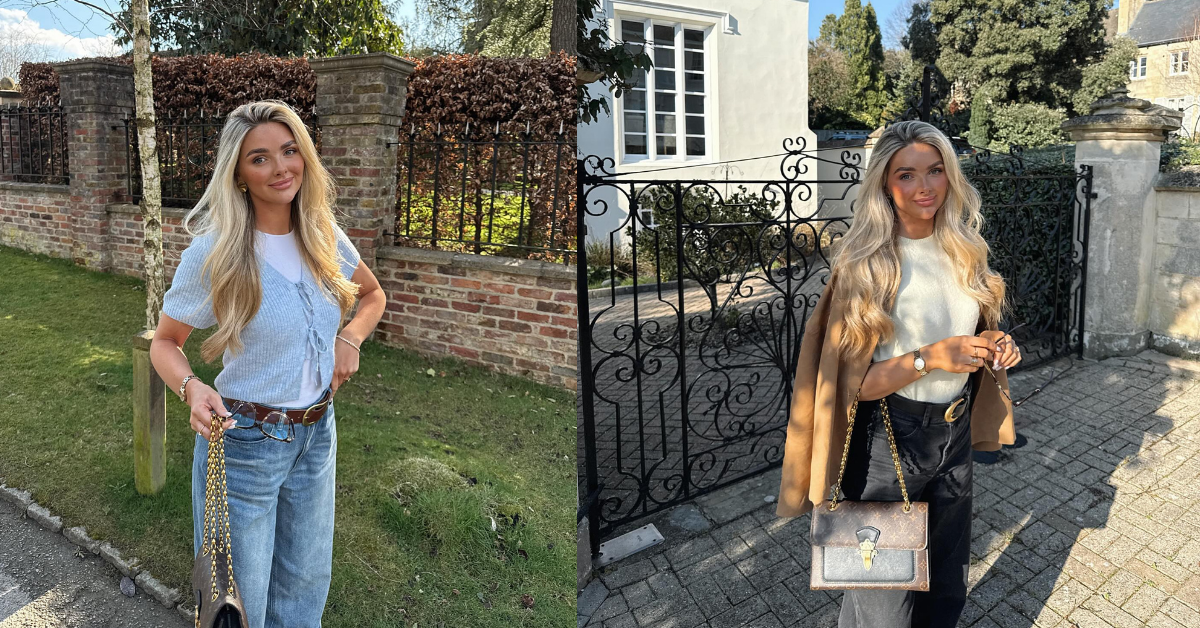
Pinterest is great at showing you a vibe. It’s not great at showing you what happens 4 hours into a normal day when you’ve walked, sat, carried a bag, gotten caught in light rain, and you’re suddenly tugging at your waistband and re-tucking your shirt in a cafe bathroom.
A luxury personal style that actually works in real life is less about “expensive pieces” and more about how your clothes behave: in motion, in your climate, with your schedule, and with your body. That’s why some people look polished in simple outfits and others can wear designer and still look uncomfortable. Fabric drape and recovery matter, and so does the kind of fit that lets you move without pulling and twisting (patternmakers call this “wearing ease”).
What you’re building is a repeatable system: a small set of silhouettes, fabrics, and outfit formulas that make you look intentional on a random Tuesday, not just in a perfectly lit mirror selfie.
Quick answer for skimmers
- Luxury style reads as luxury when your clothes look calm in motion, not stressed. Fabric drape is heavily influenced by bending and shear properties, plus fabric mass.
- “Perfect fit” is not “tight.” It’s correct ease so you can sit, walk, reach, and breathe without constant adjusting.
- Real-life luxury starts with 3 anchors: great outerwear, great trousers, and great shoes (or a great bag if you live in sneakers).
- Build a signature palette, then add texture so you don’t feel like a beige wall.
- Maintenance is part of the look: pilling, wrinkling, and shape loss will quietly ruin “luxury energy” unless you handle them.
- Your goal is fewer, better outfits you actually wear, not a closet that looks impressive. The reverse hanger method is a simple way to prove what you really use.
If you only do one thing: pick one default outfit formula you can wear 2 to 3 days a week (with small swaps). Consistency is what makes luxury style feel effortless.
The decision framework
Think in outcomes, not aesthetics.
If you want to look luxe with minimal effort
Do this:
- Choose structured, forgiving silhouettes (straight-leg trousers, long coat, clean knit)
- Prioritize fabrics that drape and recover (wool, dense knits, quality cottons)
- Keep accessories quiet and repeat them
Why this works: your outfit stays composed even when you’re moving. Drape depends on how textiles bend and shear, and better fabrics tend to do this more gracefully.
If you want luxury style but you’re busy (and laundry is real)
Do this:
- Build around machine-friendly fabrics and darker neutrals
- Own one “polished layer” (blazer or coat) that upgrades everything
- Accept that some Pinterest fabrics are high-maintenance and skip them
If you want luxury style on a budget
Do this:
- Spend on alterations and one anchor piece at a time
- Buy fewer items, wear them more, and judge value by cost-per-wear (CPW) thinking
- Shop secondhand for outerwear and tailoring, then tailor to fit
This won’t work if…
If your daily life is genuinely rough on clothes (toddlers, messy commute, lots of stairs, physical job, constant weather), a fragile “quiet luxury uniform” will feel like a costume. You can still do luxury style, but you’ll need hard-wearing versions of it (tighter weaves, darker colors, easier care).
One trade-off (no neat solution)
Luxury style that looks effortless often requires maintenance: tailoring, careful washing, depilling, steaming, shoe care. If you want “always pristine” and “never think about it,” those goals fight each other.
Step 1: Define “luxury” for you (so you don’t copy someone else’s life)
Pinterest luxury usually falls into three buckets:
- Quiet and tailored (think The Row energy)
- Classic and polished (clean accessories, heritage shapes)
- Modern minimal (architectural silhouettes, fewer details)
Pick one as your home base. Otherwise you’ll keep buying “pretty items” that don’t combine.
Here’s the simplest way to choose:
Which outfits make you feel like yourself in public? Not in your bedroom mirror. In a grocery store. In a meeting. On a rainy day.
Step 2: Build your signature palette (but don’t make it boring)
A luxury palette is less about beige and more about low visual noise.
A practical palette rule that works
- 2 core neutrals (example: navy + cream, black + charcoal, chocolate + ecru)
- 1 soft neutral (example: camel, stone, dove)
- 1 accent you can repeat (example: deep green, burgundy, denim blue)
Then add “interest” through texture, not color chaos:
- brushed wool vs smooth wool
- matte knit vs crisp cotton
- suede vs polished leather
This is how luxury outfits look rich without looking loud.
Step 3: Nail the “moves well” factor (fabric + fit)
Why luxury outfits look better in motion
Fabrics drape differently depending on bending and shear behavior and fabric mass. When a fabric bends and shears smoothly, it forms cleaner folds and hangs more gracefully as you walk.
You can spot this quickly:
- Does the coat swing cleanly, or flap and cling?
- Do trousers crease and stay creased at the knee?
- Does the knit collapse into lumps after 30 minutes?
Fit that works in real life is about ease
Patternmaking defines wearing ease as the extra room that allows movement and comfort, and design ease as additional fullness for silhouette. Too little wearing ease creates pulling and constant adjusting.
My blunt opinion: most people think they need “more outfits.” They usually need better ease and better hems.
The 30-second movement test
In a fitting room (or at home), do:
- walk 10 steps
- sit down and stand up
- reach forward like you’re grabbing a bag
- raise arms like you’re putting on a coat
If you have to fix the garment after, it’s not an effortless piece.
Step 4: Choose 3 anchor categories that carry your whole look
If you only upgrade random tops, you’ll still look “fine.” Anchors are what make you look expensive.
Anchor 1: Outerwear
A great coat, trench, or blazer makes everything under it look more intentional.
Look for:
- clean shoulder line
- lining (or well-finished interior)
- fabric weight that holds shape without looking stiff
Anchor 2: Trousers (or your version of trousers)
For some people it’s straight-leg denim. For others it’s a wool trouser or long skirt.
Look for:
- a rise you can sit in
- a leg line that doesn’t twist
- hem length that matches your shoes
Anchor 3: Shoes (or bag, depending on your reality)
If you walk a lot, your shoes decide your life. If you drive everywhere, your bag may do more visual work.
Either way, choose one “default” you repeat.
Step 5: Build outfit formulas, not outfits
This is the part Pinterest skips: repeatable structure.
Here are real-life luxury formulas that work when you’re tired:
- Long coat + knit + straight trouser + simple shoe
- Blazer + tee + denim + structured bag
- Monochrome base + one texture change (suede, wool, knit)
- Dress + tailored layer + minimal shoe
Make one formula your default. Then create two seasonal variations.
If you already have a routine that works, you can skip this section and go straight to the variations below.
Step 6: The maintenance routine that keeps “luxury” from collapsing
This is optional. Skip it if you already care for your clothes well and you’re happy with how they hold up.
Luxury style often fails because of tiny “wear signals”:
- pilling on knits
- shiny stress points (knees, elbows)
- wrinkled hems
- stretched collars
- scuffed shoes
Cashmere care is a good example: even high-quality cashmere pills in friction areas, and careful washing, airing, and depilling helps it last.
Simple routine
- Steam or hang garments to release wrinkles after wear
- Depill knits when you see fuzz starting (don’t wait until it looks tired)
- Rotate shoes and use basic care (wipe, condition, re-sole when needed)
- Store knits folded to reduce stretching
This is the unglamorous part, but it’s what keeps your closet looking “expensive” over time.
Step 7: Do a wardrobe audit that reflects your real life
A luxury wardrobe is not “a lot of nice stuff.” It’s a closet where most pieces get worn.
The reverse hanger method is popular because it’s brutally honest: turn hangers backward, flip them as you wear items, and after a set time you can see what you truly use.
What to keep
- things you reach for on normal days
- things that work with your shoes and outerwear
- fabrics that survive your schedule
What to pause (not necessarily donate today)
- anything that only works with one very specific event
- anything you have to “fix” all day
- anything you love in theory but never choose
A small human note: if your mornings are unpredictable, some of this prep simply won’t stick and that’s fine. The goal isn’t perfection, it’s fewer bad mornings.
Common mistakes that make “luxury style” look like cosplay
- Buying the vibe instead of the fit
- Fix: do the movement test and prioritize wearing ease
- Over-indexing on “neutral”
- Fix: add texture and one repeating accent
- Owning too many “almost right” pieces
- Fix: pick a default formula and build around it
- Ignoring maintenance
- Fix: small routine (steam, depill, shoe care)
- Spending on the wrong category
- Fix: anchors first (outerwear, trousers, shoes/bag), then tops
Variations: luxury personal style by real-life use case
1) Best for busy mornings
- 1 coat, 2 trousers, 3 tops, 1 shoe
- repeat a uniform and swap only one element
2) Best if you hate feeling “overdressed”
- upgrade fabric quality but keep silhouettes familiar
- choose refined basics over statement pieces
3) Best if you live in casual clothes
- invest in elevated casual: dense knits, better denim, clean sneakers
- add one structured layer (blazer or coat)
4) Best if you love Pinterest but your life is messy
- darker palette
- tighter weaves and sturdier fabrics
- fewer delicate light colors near high-contact areas
5) Best if you want quiet luxury without looking identical to everyone else
- keep the silhouette calm
- add one signature element you repeat (a shape, a shoe style, a jewelry motif)
FAQ
Do I need designer brands to look “luxury”?
No. You need calm silhouettes, better fabric behavior in motion, and fit that doesn’t fight you. Fabric drape and comfort perception relate to bending and shear properties.
What’s the fastest upgrade if I can only change one thing?
Outerwear or trousers, plus hemming. These drive your silhouette the most.
How do I avoid buying “pretty but useless” pieces?
Make every purchase answer this: “What 3 outfits does this complete with what I already own?”
Why do I still feel sloppy in expensive clothes?
Usually one of three reasons: wrong ease (movement feels restricted), wrong proportions, or the item doesn’t match your real lifestyle (too delicate, too fussy).
How many pieces do I actually need?
Enough to cover your week with repeats. Luxury style often looks better with fewer, because repetition creates a recognizable signature.
How do I justify spending more?
Cost-per-wear thinking helps: if you wear something constantly, a higher upfront price can still be better value.
Just a little note - some of the links on here may be affiliate links, which means I might earn a small commission if you decide to shop through them (at no extra cost to you!). I only post content which I'm truly enthusiastic about and would suggest to others.
And as you know, I seriously love seeing your takes on the looks and ideas on here - that means the world to me! If you recreate something, please share it here in the comments or feel free to send me a pic. I'm always excited to meet y'all! ✨🤍
Xoxo Dana