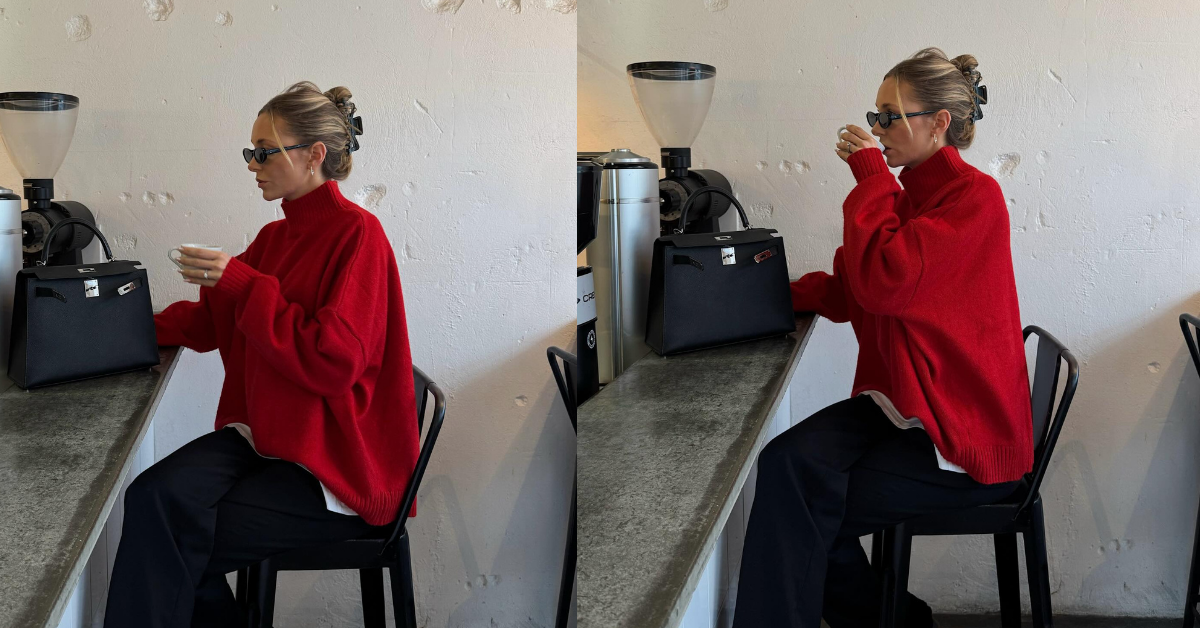
There are a lot of luxury brands that charge “because we can” prices. Hermès is unusual because a meaningful chunk of the price really does come from how the product is made and how the company is built. But let’s not pretend it’s only craftsmanship, either.
Hermès pricing is the end result of four things working together: (1) labor-heavy manufacturing (especially leather goods), (2) tight control over supply and distribution, (3) a brand that’s been trained to feel “timeless” rather than trendy, and (4) a customer experience designed to keep demand higher than availability.
If you’ve ever looked at a Birkin or Kelly and thought, “It’s a leather bag… why is this the cost of a small car?”, you’re not missing some secret detail. The “expensive” is the point. The trick is figuring out whether you’re paying for something you actually value (materials, workmanship, longevity) or something you’ll get bored of once the dopamine wears off (status, chasing scarcity).
I’ll walk you through both, without the fantasy.
Quick answer for skimmers
- A big part of the cost is labor. Top Hermès bags can take dozens of hours to make, often by a single craftsperson using techniques like saddle stitching.
- Hermès intentionally limits supply and tightly controls where product is sold. This supports demand and pricing power.
- Their leather-goods business is massive and highly profitable. In 2024, Leather Goods and Saddlery was the largest revenue segment (€6,457m of €15,170m total revenue).
- Scarcity is part real, part designed. “Quota bags” (like the Birkin and Kelly) are linked to relationship-based selling, which has even sparked litigation in the US.
- The resale story is not guaranteed. Premiums can fall when the market cools, even for the most famous bags.
- Vertical integration matters. Hermès emphasizes in-house and France-based production, plus ongoing investment in workshops and training capacity.
- You’re also paying for “refusal.” Hermès is one of the few luxury houses that can say “no” to scaling the thing you want most and keep the brand stronger for it.
If you only do one thing: decide which bucket you’re in: “I want a beautifully made object I’ll use for 10+ years,” or “I want the feeling of owning a hard-to-get symbol.” Hermès serves both, but you should be honest about which one you’re buying.
The decision framework: what you’re actually paying for
Think of the Hermès price tag as four stacked layers.
1) The object layer (materials + labor)
If you care about:
- construction details (hand stitching, edge finishing, hardware quality)
- durability and repairability
- consistency from year to year
…then Hermès can make sense, in the same way a well-made shoe or a good coat can make sense.
If you don’t care about those things, this layer won’t feel worth it.
2) The capacity layer (why they can’t just “make more” overnight)
Hermès talks openly about training and “transmission of savoir-faire,” including its own leather training approach (“leather school”).
That’s partly culture, partly production reality: scaling craft is slower than scaling factories.
3) The access layer (distribution + scarcity)
If you want the most iconic bags, you’re dealing with relationship-based selling and constrained availability. That’s not a conspiracy theory. It’s part of how the brand operates, and it’s been described in mainstream reporting and at the center of legal claims about tying practices.
4) The meaning layer (brand equity)
This is the layer people argue about online because it feels “made up.” But it’s also real: brand meaning is what keeps a bag from being “a bag” in the buyer’s head.
Here’s my blunt take: you can dislike it morally and still admit it works economically. Hermès’ profitability is not subtle. In 2024, it reported €15,170m revenue and recurring operating income of €6,150m (40.5% of revenue).
Common mistakes people make (and what to do instead)
- Mistake: Thinking you’re only paying for leather.
Fix: Assume you’re paying for a business model (craft + scarcity + brand). If you’re not okay with that, you’ll resent the purchase. - Mistake: Treating it like an investment plan.
Fix: Treat resale as a possible outcome, not the reason. Even top-tier resale premiums can compress when markets shift. - Mistake: Buying the “right” item for someone else’s approval.
Fix: Pick what you’ll use weekly. Hermès has plenty of beautiful things that aren’t quota-bag theater. - Mistake: Confusing “hard to get” with “best for you.”
Fix: Hard-to-get is a feeling, not a fit test. - Mistake: Ignoring opportunity cost.
Fix: This won’t work if buying it creates financial stress. Luxury that makes you anxious stops being luxury fast.
Deep dive: the craft is real, and it’s expensive
The time factor (labor is the hidden giant)
High-end Hermès bags are often described as taking up to around 40 hours of work by a single skilled craftsperson (depending on model and complexity).
That matters because labor costs don’t scale like materials. Even if you doubled the price of leather, it’s still the skilled hours that stay stubbornly expensive.
The technique factor (why saddle stitching is a flex)
Saddle stitching (often cited as part of the Hermès reputation) is slower than machine stitching, and it’s harder to do well consistently. It’s one of those details that doesn’t look like much in a photo, but it changes strength and repairability in the real world.
The training factor (you’re paying for a pipeline)
Hermès explicitly frames training as a structured method for transferring leatherworking skills, created to support long-term capacity as demand grew.
If you’ve ever tried to hire skilled makers in any field (tailoring, cabinetry, jewelry), you know this is the bottleneck: you can’t just “hire 500 more artisans” next quarter and keep quality identical.
Trade-off (no neat solution): craft-based capacity is slow by design. That’s part of why Hermès feels special, and it’s also why it will always be limited and frustrating if you want instant access.
Deep dive: the business model quietly does a lot of the work
Leather goods is the engine
Hermès is not a “handbag company,” but leather goods is still the biggest revenue segment. In 2024, Leather Goods and Saddlery brought in €6,457m out of €15,170m total revenue.
That matters because the brand’s most desired products are also tied to its strongest economics.
Profitability is part of the story, not a scandal
In 2024, Hermès reported:
- Revenue: €15,170m
- Recurring operating income: €6,150m (40.5% of revenue)
Those numbers don’t prove “overpricing” by themselves. They prove pricing power. And pricing power comes from demand staying higher than supply over long periods.
Controlled production expansion (slow, steady, intentional)
Hermès has publicly discussed opening and planning leather goods workshops in France (including the opening of its 23rd leather goods workshop in Riom and additional projects scheduled in coming years).
This is the opposite of fast-fashion scaling. It’s closer to: “We’ll grow, but only at the pace that protects the craft narrative and quality control.”
Deep dive: scarcity and access are not accidental
The “quota bag” system and relationship-based selling
For the most coveted bags, Hermès is frequently described as using a relationship-driven sales approach. That approach has been alleged in US lawsuits as a form of “tying,” meaning customers claim they were pressured to buy other items to be offered the chance to buy a Birkin. Hermès has disputed claims in court filings and reporting.
Whether you see this as “good clienteling” or “manipulative gatekeeping,” it does two things:
- It keeps quota bags scarce.
- It pushes customers deeper into the brand ecosystem.
This won’t work if: you hate feeling managed by a retail system. Some people enjoy the relationship part. Others find it deeply annoying. Know yourself.
Scarcity has economic consequences (even when it wobbles)
The resale market often bakes in the expectation of scarcity. But it can cool. Reporting has noted periods where premiums have fallen and scarcity-driven strategies can weaken when resale economics change.
So yes, scarcity matters, but it’s not magic. It’s a market dynamic.
Deep dive: why the materials still matter (but won’t explain everything)
Hermès uses many leather types and finishes across its lineup. Buyers often obsess over which leather is “best,” but the more useful question is: what texture, structure, and scratch behavior fits your lifestyle?
- If you’re rough on bags, you’ll likely prefer more textured, durable grains (they hide wear better).
- If you want a crisp shape, you’ll prefer stiffer leathers that hold structure.
- If you want slouch, softer leathers will feel better but show “life” sooner.
This is optional. Skip it if you’re not choosing leather and you’re just trying to understand the pricing logic.
(Also, if you’re shopping pre-owned, leather choice matters a lot more than people admit because it changes how a bag ages.)
So… is Hermès “worth it”?
Here’s the honest version: “worth it” depends on what you’re trying to buy.
Worth it if you want:
- a long-lasting, repairable object and you’ll actually use it
- craftsmanship you can see and feel over time
- a design language that stays stable across years
- the Hermès ecosystem (service, stores, the whole vibe)
Not worth it if you want:
- instant gratification
- visible logo validation
- a guaranteed profit flip
- a purchase that feels fair in a purely utilitarian way
My strongest opinion (just once): I usually tell people to stop treating a Birkin like an investment. If you wouldn’t still want it after a year where resale premiums soften, you’re not buying a bag, you’re buying a story that might change.
Options and variations: enjoying Hermès without the circus
1) The “I want the craftsmanship, not the chase” route
- Look at non-quota leather goods, small leather accessories, or less-hyped bag lines.
- You’ll often get excellent materials and build quality without the access games.
Trade-off: you won’t get the same social signaling as the most iconic bags. There’s no workaround for that. (And that’s okay.)
2) The “I want iconic design, but I’m not playing relationship retail” route
- Consider reputable resale or auction channels. Christie’s often discusses craftsmanship and market context in its editorial content, and auction houses are a major part of the high-end secondary ecosystem.
Trade-off: condition risk, authentication due diligence, and sometimes higher prices than retail for in-demand specs.
3) The “I just want one beautiful Hermès piece” route
- Silk scarves and classic accessories can be a satisfying way to own something iconic and wearable without tying up five figures.
4) The “I want a forever bag, but not Hermès pricing” route
If your core desire is “a well-made leather bag that lasts,” there are other top-tier makers (different aesthetic, less resale hype) that can deliver durability for less. You’ll give up the Hermès meaning layer, but you might gain peace.
FAQ
Why are Hermès bags so hard to buy in the first place?
Because supply is constrained and access is managed, especially for the most in-demand models. This dynamic has been widely reported and litigated in the US context.
How much does a Birkin cost?
Prices vary by size, leather, hardware, region, and taxes, and Hermès doesn’t publish a simple universal price list. Mainstream reporting commonly describes Birkins as costing thousands of dollars and often starting around five figures, with much higher prices for exotic or rare specs.
Does it really take that long to make?
High-end coverage and auction/editorial sources commonly cite up to about 40 hours for a Birkin, depending on complexity.
Are Hermès bags better made than other luxury bags?
Many are extremely well made, especially compared with mass luxury. But “better” depends on what you value: craftsmanship, leather selection, finishing, and repair culture are strong points. The gap is not always proportional to the price gap.
Are they a good investment?
Sometimes, but it’s not guaranteed and markets shift. Recent reporting has noted periods where scarcity-driven resale premiums have softened.
What’s the deal with the lawsuit?
A proposed US class action alleged Hermès tied the opportunity to buy a Birkin to the purchase of other goods; Hermès has fought the claims in court.
Why doesn’t Hermès just make more bags?
Because the brand’s identity and economics rely on controlled supply, and craft capacity scales slowly. Hermès also describes ongoing investment in workshops and training, which signals intentional, paced expansion rather than rapid scaling.
Is the high price mostly marketing?
Marketing is part of luxury, but Hermès also shows unusual operational discipline and profitability, plus labor-intensive production in its core categories. In 2024 it reported €15,170m revenue and recurring operating income of €6,150m (40.5%).
Just a little note - some of the links on here may be affiliate links, which means I might earn a small commission if you decide to shop through them (at no extra cost to you!). I only post content which I'm truly enthusiastic about and would suggest to others.
And as you know, I seriously love seeing your takes on the looks and ideas on here - that means the world to me! If you recreate something, please share it here in the comments or feel free to send me a pic. I'm always excited to meet y'all! ✨🤍
Xoxo Dana