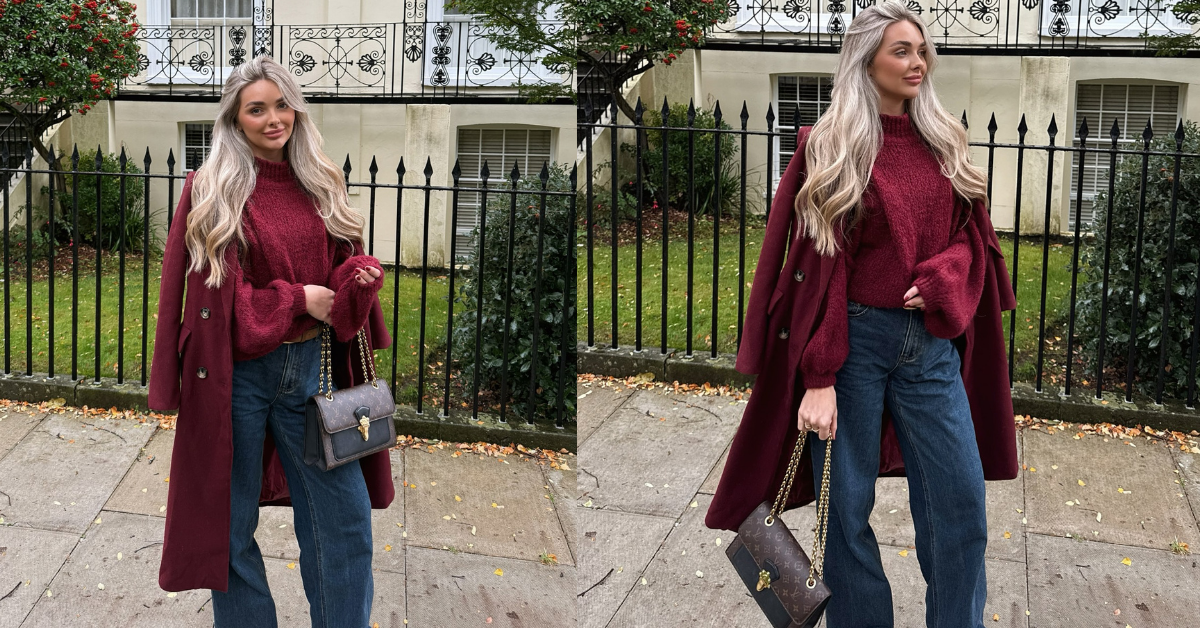
You know that moment when someone walks past you and their coat swings cleanly, their trousers don’t bunch at the knee, and the whole outfit looks “expensive” before you’ve even registered what they’re wearing?
That’s not magic, and it’s not just “good styling.” Luxury outfits often look better in motion because the clothes are built to move like clothing, not fight your body. Two things make the biggest difference:
- Fabric behavior (how it bends, folds, drapes, and recovers)
- Fit engineering (how the pattern allows movement without pulling, twisting, or collapsing)
Most outfits look okay when you’re standing still. Motion is the stress test. Walking, sitting, reaching, turning your head, putting your hands in pockets. That’s when cheaper fabric and shortcut fit show up as drag lines, cling, weird flare, twisting seams, and constant adjusting.
Let’s break down what’s happening, in plain English, and how you can spot it in 30 seconds in a fitting room.
Quick answer for skimmers
- Luxury looks better in motion when fabric drapes and recovers smoothly, instead of creasing and staying creased.
- “Drape” is measurable (often described with a drape coefficient), and it’s strongly influenced by bending stiffness, shear, thickness, weight, and construction.
- Great fit is not “tight” or “loose.” It’s correct ease + correct balance, so the garment moves with you instead of against you.
- The best fabrics for movement often have controlled flexibility (they bend and shear without buckling). Objective systems like KES measure properties like bending rigidity to predict how fabric behaves.
- Small pattern decisions matter: grain direction, bias cuts, and sleeve/shoulder angles can dramatically change how clothing moves.
- Finishing makes motion look smoother: linings, hems, interfacing, and weight distribution reduce cling and distortion.
- The easiest “luxury in motion” upgrade is boring but real: buy fewer items and pay for better fabric + tailoring.
If you only do one thing: do a “movement audit” in the mirror: walk 10 steps, sit, reach forward, raise arms, turn. If you have to adjust the garment afterward, it’s not engineered well.
The decision framework: what makes clothes look good while moving?
When you move, a garment is constantly deforming in a few ways:
- Bending (folding at elbows, knees, waist)
- Shearing (the fabric shifts shape as it wraps around curves)
- Stretch/extension (especially in knits, or woven fabrics on the bias)
- Recovery (does it bounce back, or stay rumpled?)
Textile engineering frameworks describe drape as strongly affected by things like bending rigidity and shear rigidity, plus thickness and weight.
Patternmaking frameworks describe fit as a combination of:
- wearing ease (space so you can breathe, sit, move)
- design ease (space for the intended silhouette)
Luxury tends to win because it’s better at both: fabric that behaves beautifully and patterns that anticipate movement.
This won’t work if…
If you truly want ultra-crisp structure all day (think stiff, sharply pressed, “architectural” looks), you might prefer fabrics that don’t drape much. Those can look incredible standing still, but they won’t look fluid in motion. That’s not a failure, it’s a different goal.
Part 1: Fabric in motion (why some materials look “alive” and others look messy)
1) Drape is not “softness.” It’s controlled collapse.
Drape is basically: how a fabric hangs under its own weight and how it forms folds and waves. Engineers describe drape using measurements like a drape coefficient and analyze “nodes” and wave shapes.
What you see as “luxury flow” usually comes from a fabric that:
- bends easily without looking flimsy
- shears smoothly around the body without buckling
- has enough weight to fall cleanly
That’s why some wools, silks, and dense knits look elegant while moving, and some thin synthetics look twitchy, clingy, or wrinkly.
2) Bending rigidity: the hidden reason expensive coats swing better
Bending rigidity is basically how much force it takes to bend fabric. Tools like the Kawabata Evaluation System (KES) measure it directly. Higher bending rigidity generally means stiffer fabric; lower means more fluid.
In real life:
- Too stiff: the garment “stands away” and can look boxy or noisy when moving.
- Too limp: it collapses, clings, and shows every underlayer and wrinkle.
- The sweet spot: it moves as one clean shape.
This is why a luxury wool coat often “swings” instead of flapping.
3) Shear rigidity: the “wrap around curves” factor
Shear is when fabric shifts shape like a parallelogram (imagine pushing the top of a square sideways). Shear rigidity is resistance to that deformation.
Why you should care:
- Low shear rigidity can create gorgeous drape, but it can also make fabric distort during cutting and sewing if not handled well.
- High shear rigidity can make fabric fight being shaped into 3D form, causing buckling and awkward folds.
Luxury garments often succeed because the maker understands how to stabilize and construct the fabric so it keeps the elegant behavior without the chaos.
4) Thickness and weight: not “heavy is better,” but weight placement matters
A common myth is that heavier fabrics are always more luxurious. Not exactly.
What matters is appropriate weight for the silhouette:
- Floaty dress: needs controlled drape (often lower bending stiffness).
- Suit: needs shape retention (often higher stiffness + structure).
- Knitwear: needs enough density to hang straight and recover.
Research and engineering references consistently point to weight, thickness, and construction as key drivers of drape behavior.
5) Fiber and weave: why “cheap polyester” often looks worse in motion
This is not a “polyester is bad” argument. It’s a “cheap, thin, low-recovery fabric is bad” argument.
A few practical reasons some lower-cost fabrics look worse in motion:
- they crease sharply and don’t recover
- they cling (static + low weight + smooth surfaces)
- they show shine at stress points (knees, seat, elbows)
- they flutter instead of folding in slower, cleaner waves
In other words: the movement reads “nervous” instead of “calm.”
Part 2: Fit in motion (why good tailoring looks effortless)
If fabric is the paint, pattern is the architecture. Motion reveals the architecture.
1) Ease: the difference between “it fits” and “it works”
Ease is the space between your body measurement and the garment measurement. Most patternmaking sources split it into:
- wearing ease: allows comfort and movement
- design ease: creates the intended silhouette
In motion, not enough wearing ease causes:
- pulling across the back when you reach forward
- buttons straining when you sit
- hem riding up when you walk
Too much ease causes:
- fabric sloshing around, collapsing into wrinkles
- shoulders slipping, necklines gaping
- “why does this look sloppy after 10 minutes” energy
Luxury brands spend money on fit blocks, multiple fittings, and better grading. That’s a big reason their pieces look “alive” rather than “stressed.”
2) Balance: when the garment hangs correctly from the shoulders and hips
Balance is less talked about than “size,” but it’s huge. A balanced garment hangs straight with your posture. An unbalanced garment rotates around you.
You can spot imbalance fast:
- side seams creeping forward
- jacket hem kicking out behind
- collar floating off the neck
- trousers twisting around the calf
Luxury tailoring often looks better because the pattern is corrected for these rotational forces, not just circumference.
3) Shoulder and sleeve engineering: why you can “feel” a good blazer
This is where motion really exposes quality.
Sleeve pitch (the angle the sleeve is set into the armhole) affects whether your sleeve hangs cleanly when your arms rest naturally. If it’s wrong for your posture, you get twisting and drag lines.
A strong opinion: most people blame their body when their jacket pulls. It’s usually the jacket. Not always, but often.
4) The armhole (armscye) secret
High-quality tailoring often uses a higher armhole with more precise shaping. Counterintuitively, that can improve mobility because the garment moves from the shoulder instead of dragging the whole jacket up when you lift your arms.
If you’ve ever raised your arms and watched the entire blazer climb toward your ears, you’ve seen the cheap version.
Part 3: Construction and finishing (the stuff you don’t see, but you absolutely see in motion)
Even great fabric and a decent pattern can look average if construction is sloppy.
Linings: the glide layer
A good lining helps the garment move over your body and underlayers. It reduces grab and cling, especially in coats and skirts. It also helps the outer fabric keep a cleaner line.
Interfacing and structure: controlled stiffness where it matters
Luxury doesn’t mean unstructured. It often means structure placed surgically:
- collar that stays flat
- lapel that rolls cleanly
- waistband that doesn’t collapse
- pocket area that doesn’t ripple
Hems and weighting: why the bottom edge matters in motion
A thoughtfully finished hem can add a tiny bit of weight and stability so the garment doesn’t flutter and flip. When you walk, the hem is basically conducting the whole “wave” of the garment.
The fitting-room movement tests (steal these)
Do these in front of a mirror. You’ll learn more than you will from the label.
- The 10-step walk
- Does the coat swing cleanly?
- Do trousers crease into permanent lines at the knee?
- Sit test
- Do buttons strain?
- Does the waist dig or gap?
- Do you need to tug the skirt down after standing?
- Reach forward
- Does the back pull tight across shoulder blades?
- Does the collar lift away from the neck?
- Arms up
- Does the whole top ride up?
- Do sleeves twist?
- Hands in pockets
- Does the garment distort or maintain shape?
If you do those and the outfit still looks calm, that’s a good sign.
This is optional. Skip it if you already know your best silhouettes and you’re only checking fabric quality.
The honest trade-off (no solution)
Clothes that look incredible in motion often require:
- better fabric (cost)
- better construction (cost)
- more maintenance (time and care)
If you want “luxury movement” and “wash-and-go” at the same time, you’ll find some wins, but you won’t get perfection. That’s just reality.
How to get the “luxury in motion” effect without luxury prices
I’d focus on rules, not brand hunting.
Rule 1: Buy for drape first, trend second
Look for:
- fabric with a bit of weight
- smooth folding (not crunchy)
- recovery after you scrunch it lightly in your hand
Rule 2: Spend tailoring money on the pieces that move the most
Best ROI alterations:
- trouser hem and break
- sleeve length
- waist shaping (when possible)
Rule 3: Prioritize one anchor piece that carries motion
If you only upgrade one thing, do it here:
- coat
- trousers
- blazer
- long skirt
These are the items where motion is most visible.
Common reasons outfits look worse in motion (and quick fixes)
- Too-tight armholes: sizing up won’t always fix it; you need better pattern shaping.
- Thin, shiny fabric: it highlights every crease and stress point. Choose denser weaves or knits.
- Incorrect rise in trousers: creates pulling when sitting and walking.
- No structure where needed: collars collapsing, waistbands rolling.
- Static cling: sometimes it’s just cling. A slip or better lining solves a lot.
FAQ
Is “drape” the same as stretch?
No. Drape is about how fabric hangs and forms folds under gravity. Stretch is how much it elongates under tension. Bias-cut wovens can act stretchier because of grain direction, even without elastane.
Why do bias-cut dresses look so good when walking?
Cutting on the bias (about 45 degrees to the grain) increases fluidity and allows fabric to conform and move around the body more smoothly.
What fabric properties most affect that “fluid luxury” look?
Bending and shear behavior are major drivers, plus weight and thickness. Objective measurement systems (like KES) exist specifically to quantify these.
Why do some expensive-looking outfits still wrinkle?
Wrinkling is partly fabric, partly construction, partly how the garment fits and where it’s stressed. Some luxurious natural fibers wrinkle easily. That’s not automatically “cheap,” it’s just a different behavior.
What’s the fastest way to spot bad fit in motion?
Side seams shifting, collar lifting, constant tugging, sleeves twisting. If you have to reset the garment after every movement, it’s a pattern problem or a sizing mismatch.
Just a little note - some of the links on here may be affiliate links, which means I might earn a small commission if you decide to shop through them (at no extra cost to you!). I only post content which I'm truly enthusiastic about and would suggest to others.
And as you know, I seriously love seeing your takes on the looks and ideas on here - that means the world to me! If you recreate something, please share it here in the comments or feel free to send me a pic. I'm always excited to meet y'all! ✨🤍
Xoxo Dana