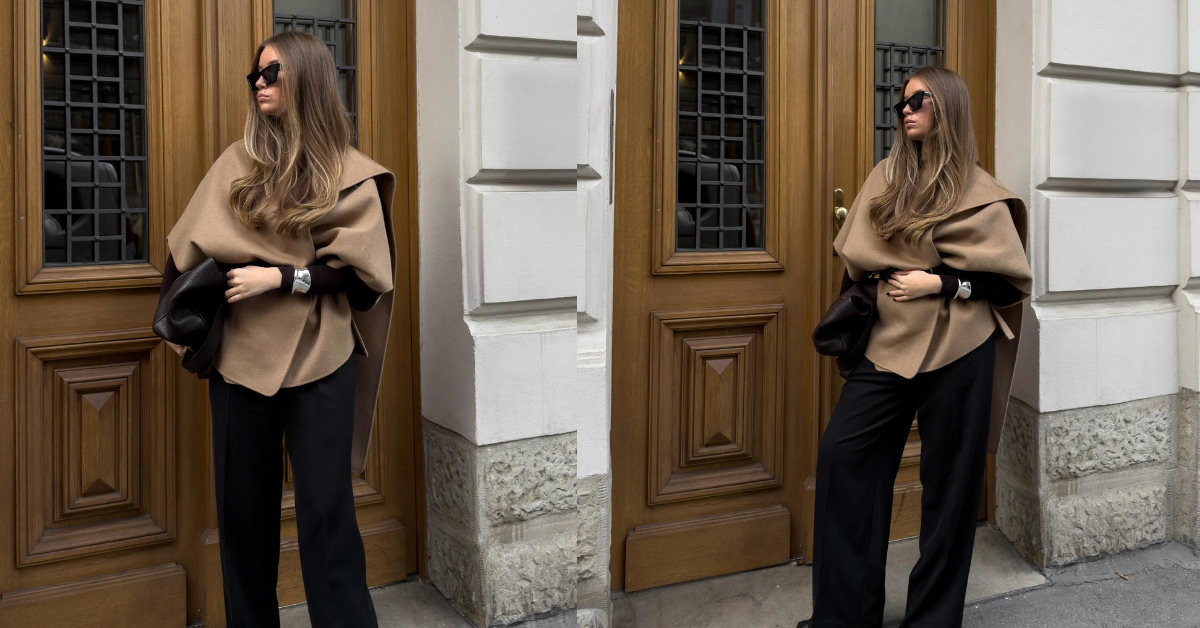
Minimalism and luxury style get lumped together because, on the surface, they can look similar: clean lines, neutral colors, no loud logos. But they are not the same thing.
Minimalism is a philosophy of reduction. It asks: what can I remove and still have something functional and beautiful? That “less is more” idea shows up across design traditions.
Luxury style is a philosophy of refinement. It asks: what can I improve so the simple thing feels exceptional? It’s not necessarily fewer pieces. It’s better choices at the level of fit, fabric, finish, and how everything sits together.
If you’ve ever tried to “dress minimal” and ended up looking plain, this is why: you copied the shape of the aesthetic, but missed the signals that read as luxury.
Let’s break down those signals in a way you can actually use.
Quick answer for skimmers
- Minimalism is about subtraction. Clean lines, limited palette, minimal ornament, function first.
- Luxury style is about precision. The difference shows up in fabric, tailoring, finishing, and proportion, even when the outfit is simple.
- Luxury is “quiet” only when the details are loud enough up close. Quiet luxury is commonly described as high-quality materials, timeless tailoring, and muted branding.
- Value contrast matters more than color. If your outfit reads like one flat gray in a black-and-white photo, it often won’t look expensive. The idea of “value” as light-to-dark is a core color principle.
- Texture is a luxury shortcut. Mix matte and sheen, smooth and nubby, structured and soft, and the look gains depth fast.
- Minimalism can feel cold; luxury can feel warm. Same neutral palette, different intent.
- One expensive detail beats five “minimal” ones. A great coat, shoe, or bag can carry basics.
If you only do one thing: stop asking “Is this minimal?” and start asking “What’s the point of attention in this outfit?” In luxury style, there’s always a point of attention, it’s just subtle.
The simplest way to tell them apart
Here’s the litmus test:
Minimalism
- You notice what’s not there.
- The outfit looks calm from far away.
- The goal is visual quiet.
Minimalist fashion is commonly described as simplicity, clean lines, functional pieces, and minimal embellishment.
Luxury style
- You notice what’s right when you get closer.
- The outfit looks calm from far away, but richer up close.
- The goal is visual quiet plus tactile depth.
Quiet luxury, as a trend description, is often framed around quality materials and timeless tailoring with understated branding.
Same silhouette, different engineering.
The big misconception: “Minimal pieces = luxury look”
This is where people get stuck. They buy a white tee, black trousers, and a beige coat and expect “old money” to appear.
It won’t, unless the details do the heavy lifting.
This won’t work if your wardrobe is built mostly from thin, clingy fabrics that shine under indoor lighting. Even the best styling rules can’t fully override cheap-looking material.
The details that make luxury style feel different
1) Fabric is doing more than color
Minimalism can live in almost any fabric as long as the design is clean.
Luxury style usually relies on fabric that has depth:
- dense cotton that holds shape
- wool with a dry, structured hand
- cashmere that looks soft but not fuzzy
- silk that drapes without looking slippery
Why it matters: fabric is the first thing people read subconsciously. Even if they can’t name it, they can feel it.
A practical shortcut: if the fabric looks better in motion than standing still, you’re in luxury territory.
2) Proportion is intentional, not just simple
Minimal outfits can be “basic”: slim top, slim bottom, done.
Luxury outfits usually use proportion like design:
- long coat over straight leg
- cropped jacket over a longer knit
- wide trouser balanced by a refined shoe
- clean neckline that frames the face
This is where luxury style is not minimalism. A luxury outfit can be very simple, but it’s rarely accidental.
One strong opinion, because it’s true: I usually tell people to stop chasing variety and instead build one default silhouette that always works. That’s what reads as expensive, not endless experimentation.
3) Finishing is the quiet flex
Minimalism doesn’t require close inspection.
Luxury style rewards it.
Look for signals like:
- clean hems and edges
- tidy stitching with no loose threads
- pattern matching at seams (stripes, checks)
- seams that look reinforced and intentional
Even mainstream guides on clothing quality point out stitching consistency, reinforced seams, and pattern alignment as durability and craftsmanship cues.
Optional. Skip it if you’re not a details person: the next time you’re shopping, flip the garment inside out. If it looks neat inside, it often wears better outside.
4) Value contrast is what makes neutrals look expensive
If you take nothing else: luxury neutrals are built on value (light-to-dark), not just “matching beige.”
The Munsell color system defines “value” as the lightness or darkness of a color along a white-to-black axis.
How to use that in outfits:
- pick one anchor (dark trouser, deep coat, or strong shoe)
- keep the rest within a tighter range
- avoid the “all mid-tones” trap (it reads flat)
A simple check: take a mirror photo and turn it black-and-white. If your outfit turns into one mushy gray block, you need a clearer light/dark structure.
5) Texture creates depth without adding “stuff”
Minimalism often avoids texture because it can look busy.
Luxury style uses texture to create richness while staying quiet:
- matte wool + smooth leather
- crisp cotton + soft knit
- suede + sharp tailoring
This is why an outfit can be “simple” but still feel expensive. It’s visually calm, but materially complex.
Trade-off with no perfect solution: texture can be harder to maintain. Suede scuffs. Knits pill. Silk pulls. Luxury style asks more of you in care and storage, and you either accept that or you don’t.
6) Hardware and “edges” are controlled
Minimal outfits can fall apart at the edges:
- the wrong shoe
- a belt that looks flimsy
- shiny, noisy hardware
- a bag that fights the palette
Luxury style controls edges on purpose: shoes, belt, bag, sunglasses, and jewelry all speak the same language.
This is where brands known for understated luxury aesthetics like The Row get referenced so often in quiet luxury conversations.
Minimalism vs luxury style: how to build each on purpose
If you want minimalist style (true reduction)
Use these rules:
- Limit palette (black/white/gray or cream/taupe/brown)
- Limit silhouettes (repeat the same shapes)
- Keep surfaces clean (few textures, few accessories)
- Prioritize function and versatility
Minimalism is commonly characterized by simplicity, clean lines, and stripping back excess.
If you want luxury style (refinement)
Use these rules:
- Keep palette quiet, but add value contrast
- Upgrade fabric density and drape
- Add one “point of attention” (coat, shoe, bag, watch, scarf)
- Control edges (hardware, shoes, grooming)
- Mix two textures minimum
Quiet luxury descriptions often center on timeless tailoring and high-quality materials with subtle branding.
Just a little note - some of the links on here may be affiliate links, which means I might earn a small commission if you decide to shop through them (at no extra cost to you!). I only post content which I'm truly enthusiastic about and would suggest to others.
And as you know, I seriously love seeing your takes on the looks and ideas on here - that means the world to me! If you recreate something, please share it here in the comments or feel free to send me a pic. I'm always excited to meet y'all! ✨🤍
Xoxo Dana