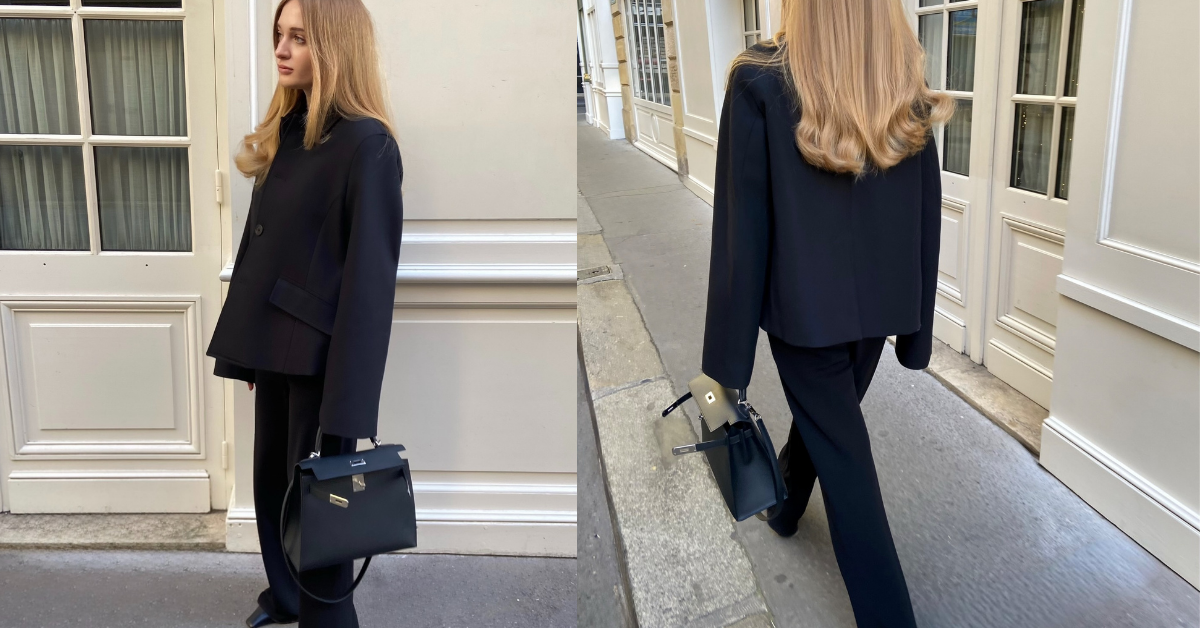
Quiet luxury gets reduced to “beige outfits” way too often. The real thing is more specific: it’s when the construction, fabric, and proportion do the talking, and the branding is almost an afterthought.
That’s why The Row effect feels different from, say, “minimalism” or “capsule wardrobe content.” It’s not just fewer logos. It’s a whole system: obsessive materials, disciplined silhouettes, controlled distribution, and even a deliberate refusal to play the normal attention game (including phone bans at shows).
And it works. The brand has become shorthand for taste, discretion, and “I know what I’m looking at,” which is basically the emotional core of quiet luxury.
Below is a decision-helpful breakdown: what The Row actually is, why it signals luxury so strongly, what you can copy without spending The Row money, and where this aesthetic genuinely won’t fit your life.
Quick answer for skimmers
- Quiet luxury is a signal: quality, fit, and restraint, not obvious branding.
- The Row’s signature is precise tailoring + exceptional fabrics + simple shapes (that don’t read basic when worn).
- The brand reinforces mystique with tight control over visibility, including no-phone runway policies.
- Their bags are “quiet” but not subtle in price: Soft Margaux 15 is listed at €5,100 in the EU store (example).
- If you want the look without the spend, copy the rules (fabric, proportion, finishing) instead of hunting for “dupes.”
- A practical entry point is silhouette-led pieces: a long coat, straight trousers, a clean knit, and a structured tote style.
- This aesthetic is high maintenance in a hidden way: tailoring, fabric care, and keeping things looking pristine matter.
If you only do one thing: stop shopping by “items” and start shopping by fabric + drape + finishing. That’s where The Row’s effect actually lives.
What “The Row effect” really means
The Row (established in 2005) is built around uncompromising quality: exceptional fabrics, impeccable details, and tailoring that looks effortless because the work is invisible.
It’s associated with quiet luxury because it nails three things at the same time:
- You can’t clock it from across the street (no loud branding).
- You can clock it up close (fabric, cut, finishing, how it hangs).
- It makes “simple” outfits look intentional rather than plain.
That’s the effect: the brand doesn’t need to shout because the product carries status through disciplined design.
The decision framework: how to tell if you actually want this style
If you want quiet luxury, prioritize these 5 signals
- Fabric quality you can feel
- Dense knits that don’t collapse
- Wool that drapes instead of clinging
- Leather with structure and a “quiet” sheen
The brand itself emphasizes exceptional fabrics and precise tailoring.
- Proportion over decoration
- Slightly longer hems
- Intentional volume (not oversized chaos)
- Clean necklines and sleeves
- Finishing
- Seam placement that flatters
- Linings that help garments glide
- Hardware that’s minimal but solid
- Consistency
Quiet luxury reads “expensive” when your wardrobe doesn’t fight itself. Neutral doesn’t mean boring. It means repeatable. - Controlled attention
The Row leans into scarcity and privacy (not constant hype), including the now-famous phone restrictions at shows.
This won’t work if…
If your style joy comes from color, pattern, playful accessories, or maximal silhouettes, The Row-inspired uniform can feel like you’re dressing as someone else. You can borrow elements (fabric, tailoring) without adopting the whole restraint thing.
One trade-off (no neat solution)
Quiet luxury is not budget-friendly if you want it to look and feel real. You can find clean designs anywhere, but the hand feel and the way fabric hangs usually costs money. There isn’t a magical workaround for that.
Why The Row became the defining reference point
1) It’s not “basic.” It’s engineered.
A beige sweater is a beige sweater until the neckline sits perfectly, the knit has weight, the shoulder seam lands exactly right, and the sleeve length makes your hands look elegant. That’s the difference between “minimal” and “quiet luxury.”
The Row’s own brand language is basically that: simplicity backed by uncompromising quality.
2) The mystique is strategic (and it’s part of the product)
The no-phone runway approach is more than a quirky rule. It’s a statement: we don’t need virality; we decide how this is seen.
That kind of control reinforces “insider luxury.” Not everyone loves it (it can read exclusionary), but it absolutely strengthens the brand’s quiet-power identity.
3) It became the uniform behind the “fashion uniform”
A lot of modern “uniform dressing” (neutral outerwear, streamlined shoes, discreet bags) is tied to the broader quiet luxury moment and the idea that sameness can be a signal of taste.
The Row is one of the brands most associated with that visual language.
4) The market validated it
In 2024, reporting said the brand received minority investment from the families behind Chanel and L’Oréal, via Mousse Partners and Tethys Invest.
Whether you care about fashion finance or not, that kind of backing is a signal: the industry sees long-term value in this positioning.
The Row price reality (so you can calibrate expectations)
Using current examples from The Row’s own site:
- A Soft Margaux 15 is listed at €5,100 (EU store example).
- Totes like the Park line show prices like $1,450 (Medium Park Tote) and other tote styles ranging upward (examples on the tote category page).
This matters because it explains why the aesthetic reads “quiet” but feels unattainable: the quietness is not a discount. It’s the point.
The Row-inspired outfit rules you can actually use
Rule 1: Pick one “anchor” that does the heavy lifting
Quiet luxury outfits often have one anchor piece:
- a long wool coat
- a perfect trouser
- a structured leather tote
- a dense knit
Everything else is simpler.
I usually tell people to stop chasing variety here. One good default outfit does more than ten options.
Rule 2: Match textures, not colors
Instead of “all black,” think:
- matte knit + smooth wool
- crisp cotton + soft cashmere
- structured leather + brushed wool
This is how neutral outfits look rich.
Rule 3: Keep the silhouette calm
If you go wide on bottom, go clean on top. If you go oversized on top, keep the leg line straight. The Row effect is rarely “tight everywhere” or “big everywhere.”
Rule 4: Make your accessories invisible (but intentional)
Quiet luxury accessories usually do one of these:
- echo the outfit’s structure (clean bag, minimal hardware)
- soften it (suede, brushed leather)
- disappear (tone-on-tone shoes)
A simple “Row-coded” shopping checklist
When you’re evaluating any item (even at a lower price point), check:
- Fabric: does it look thin under store lighting?
- Drape: does it hang smoothly, or does it stick and bunch?
- Seams: are they straight and clean?
- Weight: does it feel substantial?
- Finish: do buttons, zips, and hems look considered?
- Care reality: will you actually maintain it?
This is optional. Skip it if you already know the fabrics and silhouettes that work for you, and go straight to the variations below.
Variations: how to get “The Row energy” in real life
1) The easiest version: polished basics
Best for: work, errands, travel
- straight-leg trousers
- fine knit or crisp tee
- long coat or structured blazer
- clean tote
Keep the palette tight (2-3 main colors) and let the fabric quality carry it.
2) The texture version
Best for: you like minimal outfits but hate feeling “flat”
- suede or brushed leather tote
- wool trousers
- cashmere knit
- subtle contrast like charcoal + cream
This is where quiet luxury becomes interesting without needing color.
3) The off-duty uniform
Best for: you want comfort without looking sloppy
- heavy sweatshirt or knit
- wide-leg trousers or clean denim
- leather slides or minimal sneakers
- structured bag (so the outfit still has spine)
4) The “one statement piece” version
Best for: you want restraint but still want personality
Choose one:
- sculptural shoe
- dramatic coat shape
- unusual bag silhouette
Everything else stays quiet.
Common mistakes (and how to fix them)
- Buying “minimal” in cheap fabric
- Fix: prioritize fewer pieces with better materials.
- Going oversized without structure
- Fix: oversized works when shoulders, sleeves, and hems are intentional.
- Ignoring tailoring
- Fix: hemming trousers and sleeves is the fastest way to look expensive.
- Thinking logos are the only “non-quiet” thing
- Fix: loud contrast stitching, flimsy hardware, and thin knits also read noisy.
- Trying to look effortless while rushing
- Fix: build a default outfit formula so you’re not styling from scratch daily.
FAQ
Is The Row actually the origin of quiet luxury?
Quiet luxury as a term surged around 2023, but the idea (logo-less, material-first luxury) is older. The Row is one of the clearest modern reference points for it.
Why does banning phones matter?
Because it reinforces exclusivity and control over how collections are seen, which aligns with the brand’s stealth wealth identity.
What’s the most “Row” thing to buy first?
In general: an anchor piece you’ll wear constantly (coat, trouser, knit) or a structured bag. Price-wise, bags are still expensive, but they deliver the “signal” quickly.
Are The Row bags worth it?
If what you value is discreet design, structure, and craft, they’re a strong symbol in that lane. But if you want versatility, color, or obvious brand recognition, you’ll feel underwhelmed for the money.
Can I get the look without buying The Row?
Yes. Copy the rules: fabric weight, drape, finishing, restrained palette, and tailoring. Don’t chase “dupes” as a concept. Chase construction.
Is The Row sustainable?
The brand’s own public messaging emphasizes quality and longevity, not detailed sustainability reporting.
A third-party rater (Good On You) gives the brand a low sustainability score, but that’s an external methodology and should be treated as one input, not the full picture.
Just a little note - some of the links on here may be affiliate links, which means I might earn a small commission if you decide to shop through them (at no extra cost to you!). I only post content which I'm truly enthusiastic about and would suggest to others.
And as you know, I seriously love seeing your takes on the looks and ideas on here - that means the world to me! If you recreate something, please share it here in the comments or feel free to send me a pic. I'm always excited to meet y'all! ✨🤍
Xoxo Dana